
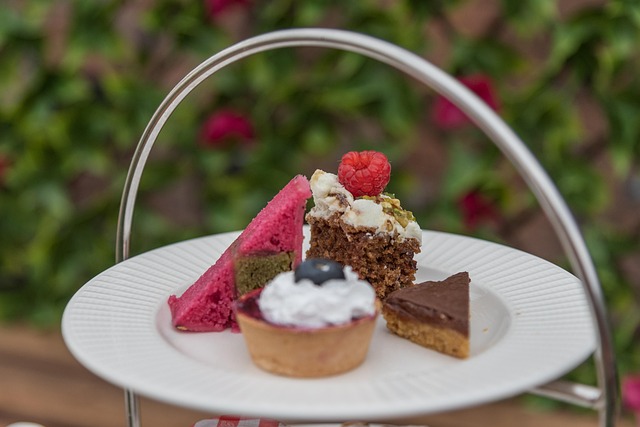
Afternoon tea has become a cherished tradition spanning centuries, offering an exceptional opportunity to spend time with loved ones in the UK, Europe, and America.
This concept has also gained popularity in South Asian countries, such as India, over the last seventy years in the “at-home tea/simple tea” version.
Afternoon tea is a light meal between lunch and dinner where people enjoy indulging in cookies, finger sandwiches, savouries, pastries, cakes and scones along with tea served in fine bone china, porcelain or ceramic tea sets.


In Britain, afternoon tea is a popular way to celebrate special events, often accompanied by a glass of wine, champagne or Prosecco in addition to tea and coffee. The finger sandwiches, pastries and cakes are served on a three-tiered stand, making it an extravagant experience.
But let’s begin with a history chapter to understand the roots of the tea custom in Britain. The Chinese were the first people to drink tea, and their invention story is intriguing, but we will discuss that in another post.

In 1600, Dutch traders were the first to import tea from China to Europe, with shipments arriving in Britain by 1650 and being served in London’s coffee houses. Tea was a rare drink back then.
The credit for popularising the tea trend in Britain goes to Catherine of Braganza, the Portuguese wife of Charles II, who became Queen of England, Scotland and Ireland and brought tea in her dowry along with other luxury goods. The concept of tea-drinking became famous among the British nobility.
In response to the demand, the British East India Company(EIC) began importing tea to Britain from China in 1664, in exchange for silver coins.
The taxes on tea imports were so high that only wealthy people in Britain could afford to drink tea. Sipping a cup of tea was associated with luxury. Due to this reason, illegal trades of tea also started happening.
Eventually, William Pitt, the Prime Minister in 1783, reduced the taxes, and the demand for tea skyrocketed from all classes of consumers.
Additionally, the British imported sugar to England from Africa through the slave trade. Over time, cold milk and sugar were mixed with a concoction of black tea leaves and hot water to pacify the heat and soften its taste.
- A Brief Introduction to Tea Production in India and Its Export to the UK
- Elevation of Tea Culture in India
- Bonding Over Chai in Indian Families
- History of English Afternoon Tea
A Brief Introduction to Tea Production in India and Its Export to the UK
When British silver reserves were depleted, the EIC and other merchants illegally imported Indian opium into China in exchange for silver. These silver coins were then used for buying tea and goods from China. In 1839, opium sales covered the entire cost of the British trade in China.
The Britishers had gained control over India through colonisation, so they considered establishing their tea production here, aiming to disrupt China’s monopoly on the tea trade.
Robert Fortune, a Scottish gardener, botanist, and industrial spy, was hired by the British East India Company(EIC) to visit China in 1848 and steal the secret formula of tea production. He sent 20,000 tea plants from China via four ships to India. Robert also brought tea experts from China.
Using these resources, the British began tea plantations and production in the Northern region of Assam. However, high temperatures and low-altitude conditions in Assam didn’t suit the Chinese tea plant.
In 1823, Robert Bruce came across an indigenous tea plant, Camellia sinensis, through the Singhpho (a principal tribe in Assam) chief, Bisa Gam.
Earlier, the indigenous plant Camellia sinensis was only utilised by a few native Indians for medicinal purposes and in cooking.
A large area of jungle was cleared using the local population to increase tea plantations on a large scale. The first English tea garden was set up in Upper Assam by the EIC in 1837.
In 1890, India became a substantial tea source for the British domestic market, but it didn’t earn a benefit from export. As tea production in India expanded, London became the prominent centre for the international tea trade.

Elevation of Tea Culture in India
Until the beginning of the 20th century, tea was considered a luxury beverage, and it wasn’t targeted at the Indian population. After World War I, the tea prices crashed in Britain, prompting Brits to seek new ways to boost sales.
The British sold high-quality tea (Orthodox tea, black or green hand-picked tea leaves)to Europeans and wealthy Brits, but they also sought to profit from selling low-quality machine-processed tea or CTC (crush, tear, curl) to the Indian population.

In 1903, the British government set up the Tea Cess Committee (TCC) to introduce the tea-drinking habit in India and expand its sales. Later in 1937, the committee was renamed to the Indian Tea Market Expansion Board.
The Indian Tea Market Expansion Board launched a massive marketing campaign targeting Indian consumers.
They provided complimentary tea initially and established a system of tea breaks for workers to give them time to consume tea.
Advertisements were published in newspapers by TCC showcasing various tea consumption scenarios.
Signs were displayed in public spaces in several Indian languages to guide people through the brewing process. Additionally, tea stalls were established at newly built railway stations, further spreading the concept of tea-drinking.
The tea vendors, also known as Chai Vallas in India, began adding spicy flavours to tea, which transformed English milk tea and suited Indian taste buds.

The CTC (crush, tear, curl) version of black tea leaves was initially bitter and pungent, but blending spices with milk and sugar helped making it more palatable for the Indian population.
The consumption of tea expanded further post-independence, when the British tea estates came under the authority of Indian owners, and a significant shift came in the display of Hindi advertising targeted at the Swadeshi audience.
Note: Indian masala (spicy) chai/Kadak chai is not similar to Chai Latte or Chai Tea, as referred to in many places outside India. English breakfast tea/Earl Grey with milk and sugar also tastes different from chai. Indian chai comes in various flavours, such as cardamom tea, saffron tea, ginger tea, etc.
Bonding Over Chai in Indian Families
As the tea-drinking habit grew in India, every household began making its version of chai by tweaking the amount of condiments and tea leaves, and also by using in-house, authentic chai masala.
I recall my father coming home in the evening after work, and my mother brewing tea and preparing snacks, allowing them to discuss their day and other important matters. It was a ritual for them, and later, my brother and I became a part of this tradition.
Even today, when I go home, my parents and I have conversations over tea and snacks. We all leave our work and sit together to chat and spend time.
Any relative who visits my parents won’t leave without having two cups of tea at least, because at our place, tea is the solution to everything.
For instance, if you have eaten oily food, they believe tea can help with digestion. If you’re feeling stressed, sipping tea can help alleviate it. If you need a kick to find an idea, have tea.
That’s why there is a famous quote for Indians: if you look inside an Indian’s body, you will find 70% tea instead of water.
Thankfully, my husband also enjoys the ritual of our at-home afternoon tea, especially since 2020, when we started working from home.
History of English Afternoon Tea
The tradition of afternoon tea has been growing since the nineteenth century, or the Victorian era. Anna Maria Russell, 7th Duchess of Bedford, introduced the trend of afternoon tea, which later evolved into a fashionable social event.
It began as a basic human need when Anna wanted to eat something between the long gap of lunch and dinner, and she asked for bread and butter, and cake with a pot of tea. Eventually, she began inviting her friends for the afternoon snack.

During the 1880s, upper-class ladies would wear long gowns, hats, and gloves while gathering for afternoon tea events in their drawing room between 4 and 5 pm.
In a way, the English afternoon tea could be considered a radical feminist act, giving liberation to women to enjoy social gatherings outside the home without their husbands. Afternoon tea became an event where British women could express their opinions and enjoy a dollop of gossip.
Note: High tea is not similar to afternoon tea. High tea is hearty supper (Working-class Britishers’ slang for dinner) served on a high kitchen table.
Hotels in London also began to add afternoon tea to their menu. The Langham was the first hotel to do this in 1865.
Tea varieties served in the English afternoon tea:
- Assam Tea (source: India)
- Darjeeling Tea(source: India)
- Earl Grey (Brand was created in England, but tea is outsourced from China and India)
- Lapsang Souchong (source: China)

Read more: https://traveltomuse.com/2025/09/16/the-best-afternoon-tea-in-london-with-a-view/
Leave a Reply