
When Dhurandhar Part 1 was released, I was in India, caught in a rough patch, so I skipped watching it. Still, the excitement swirling around the film was impossible to ignore.
Disclaimer: This post contains spoilers for Dhurandhar parts 1 and 2. If you haven’t watched them, don’t proceed.
The first scene in Dhurandhar 1 movie begins with IC 814: The Kandhar Hijack in 1999. The Intelligence Bureau Director, Ajay Sanyal, goes inside the plane for negotiations. When Sanyal informs the hijacked passengers that they will soon be freed, and urges them to complete the “Bharat mata ki…” slogan, the scared passengers didn’t dare to speak because they saw Zahoor Mistry pointing a gun at them, standing behind Sanyal.
Then he hears dialogues from Zahoor Mistry’s character played by Vivek Sinha, who smirks and says, “Hindu badi hee darpok qaum hai” and “pados me hi rahte hai hum, gude bhar ka jor laga lo aur bigad lo,” while releasing three terrorists terrorists in exchange for passengers’ security, which infuriates him to the core.
In Dhurandhar 2, Sanyal finally gets his revenge on Zahoor Mistry. This was the scene where everyone in the audience cheered, no matter what they thought of the movie.
Next was the Parliament attack in 2001, executed by JeM members, in reality relating it to Maulana Masood Azhar (one of the terrorists released during the Kandhar hijack and later founded Jash-e-Mohammad(JeM). In the movie, Zahoor Mistry was one of the militants involved in the attack, which led Ajay Sanyal to launch the Dhurandhar Spy mission in 2002 while waiting for the right leader until 2014, as the Dhurandhar 2 states a dialogue from the URI: The surgical strike movie: “Ye naya India hai, ye ghar me ghusega bhi aur marega bhi.” According to real events, it was the BJP’s tenure as a coalition party from 1999 to 2004.
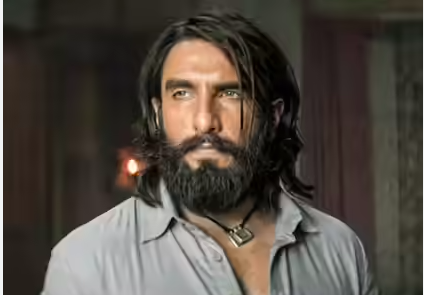
When Ranveer Singh’s character Hamza was introduced, I expected a dramatic entrance from a helicopter, like in War 1, which I love. But the film surprised me. Instead, the underdog spy arrived in Afghanistan wearing a simple pathani salwar and kurta, blending in with everyone else, while ‘Na to karwan ki talash hai’ played in the background. He quietly boarded a bus to Lyari in Karachi, Pakistan.
Lyari is known for corruption and gang wars. It’s a part of Karachi that wields significant power and influence across Pakistan.
Movies like Animal usually connect alpha masculinity with dominance and cheating, but Aditya Dhar does something different here. In one intense scene, the strong hero is clearly scared when he’s threatened with sexual assault and has to stay quiet to keep his cover. The police show up just in time. I think Aalam, the juice shop owner and undercover agent, tipped them off, or maybe it was just luck.
He works as a waiter at Aalam’s shop, learning about making juices and the speciality of Doodh Soda, an odd combination for gut health, before infiltrating the Rehman Dakait gang. Rambha Ho song in the background of a shoot-out scene in which Rehman’s son was killed by other gang members, and the stylish swirling of Ranveer’s hair with a gun in his hand are two of my favourite moments from Dhurandhar.
Hamza has to hide his love for India and show his loyalty to Pakistan. He gave arms to militants without knowing they were for the 26/11 attacks. He sends intel about attacks to India, but Arjun Rampal as Major Iqbal, the ISI officer, plays a twist by changing the date. Why didn’t the Indian government officials take the warning seriously, even if the dates were different? It is still a disturbing question. That real audio of communication between handlers and terrorists sent chills down not only Ranveer’s spine, but also the audience.
Hamza lured a young Yalina for his benefit, since she was Jameel Jamali’s daughter, but he never disrespected her. His manipulation is subtle. The world of Lyari is filled with masculinity and violence; still, Saumya Tandon, as the wife of Rehman Dakait, slaps him in front of his gang in the hospital when their elder son was killed. I have a question: Is it really possible in Karachi for a muslim girl like Yalina to go to a club in a mini dress without a burkha or hijab?
Yalina trusted Hamza wholeheartedly, unaware that it would become her deepest pain in part 2. Her emotional intelligence melts Hamza, who was trained to remain detached from relationships.
The final chapter of Dhurandhar 1 was titled “Et tu, Brutus”, quoted from William Shakespeare’s seminal play Julius Caesar, in which the king gets betrayed by his most loyal subordinate, Brutus. In the movie, Rehman is betrayed by his loyal aid Hamza. Hamza conspires with Inspector Chaudhry Aslam and manages to take the car on a different route away from Rehman’s bodyguard, where the inspector and his team were waiting for him.
Hamza Ali is strong in every way—emotionally, physically, and mentally. But he isn’t afraid to show his vulnerable side. After killing Rehman Dakait and taking him to the hospital, he comes home and asks Yalina for food, eating like he hadn’t eaten in days.
The ghost of Rehman haunts him, staring from a blood-soaked stretcher. The song “Asto Ma Satgamaya” fits perfectly as the background music for this moment.
The story goes into a flashback to 2002, and Hamza’s real name is revealed as Jaskirat Singh. He was given the mission to infiltrate the most dangerous gang of terrorists in Pakistan and extract the information.
In the post-credits, Hamza wakes up and opens a secret diary. He wipes off Rehman’s name, ending that chapter, but he has more names on the next page, including Atif Ahmed, Major Iqbal and Bade Sahab.
Next, we see flashes of young Jaskirat in Punjab and the hardships his family faced. The montage then shows Hamza’s rise as a new leader in Karachi’s Lyari underworld, helped by Jameel.
Dhurandhar 2: The Revenge Saga
Dhurandhar 2 came out on March 19. In our London theatre, it started right on time and jumped straight into the action. The opening montage shows Ranveer Singh as Jaskirat Singh Rangi, armed with weapons his friend Pinda got from Atif Ahmed, a UP politician-gangster. He storms a politician’s house in Punjab, killing all the men who won’t reveal where his younger sister is. He finally finds her chained up in a cattle shed, and you can see his anger turn into compassion in that moment.
Jaskirat is an army aspirant who returns from his military training to learn that his father, an army officer, was murdered by a local MLA over a land dispute, along with his elder sister, who was also brutally assaulted. They also beat his mother and kidnapped his younger sister. Here, you may feel there should be more scenes of Jaskirat with his family.
Jaskirat receives the death sentence from the court, but R Madhvan, posing as Mr Ajay Sanyal, saves him by staging a fake attack on a police vehicle to hire him for the mission. Jaskirat was initially reluctant due to the system’s incompetence in delivering justice to his family, but was eventually convinced to save his motherland. His mother and sister receive lifelong compensation for his absence. Remember, his friend Pinda? Jaskirat requests Pinda to marry his sister and take care of his mother as well. Pinda will come again in the “Ghosts from the Past” chapter.
Jaskirat is deeply troubled, and Ajay Sanyal picks him for the mission, hoping to turn his anger into a powerful weapon. That’s when we hear the famous line, “ghayal ho isiliye ghatak ho.”
Ranveer’s training camp scenes are saved for the end credits. Now, we see him in Afghanistan, with long hair and a strong build, burning a photo of his family in a hotel room as he becomes Hamza Ali Mazari.
At this point, we can recall Ranveer’s introduction scene from part 1 and the way he began his journey from being an employee at a juice shop to becoming a crucial member of Rehman Dakait’s gang.
This is a flashback story Hamza shares with Aalam over a cup of salted tea. When Hamza asks Aalam to share his story, he brushes him aside, saying, “Today was your day, I will tell my story some other day.”
Now that Rehman Dakait is gone, Uzair Baloch is seen as the gang’s prospective leader. Hamza, being his only trustworthy friend from the original gang, manipulates him to kill Arshad Pappu, another gang leader, proving through Rizwan’s(a loyal aid of Hamza and another undercover agent) statement that he is responsible for Rehman’s murder. This makes Uzair the face of Arshad Pappu’s gruesome murder, as Hamza records him while he plays football with Arshad Pappu’s head, putting him on the radar of the police and other gangs.
Hamja sends Uzair away from Lyari and takes the reign of Lyari into his control. Then comes another twist. Major Iqbal introduces Hamja to Bade Sahab, aka Dawood Ibrahim, who is fragile and on a deathbed, but is controlling all the operations in Pakistan and other countries from there.
Major Iqbal, who haunted the audience and Hamza in part 1 with that brutal scene of torturing an Indian spy, is shown as a good and soft-hearted father in part 2. He has an autistic daughter, and his wife is not alive. His father, Brigadier Jahangir, a disabled and retired Pakistan army official, berates him for not giving him a grandson every time he enters his house.
Just before the interval, Udaybir Sandhu as Pinda, an old friend of Hamza that I mentioned before, visits Pakistan with two more people to buy drugs and smuggle them to India. Pinda meets Major Iqbal, as he has links with ISI, and Hamja is also there. After the deal, he asks for a desi party. Major Iqbal asks Hamza to throw the party at his home.
The twist is revealed after the interval when Pinda recognised Hamza and asked him to show the restroom. Inside, he began injecting drugs as a drug addict, and asked Hamza,” Ghar ki yaad nahi aayi Jassi?” Hamza is confused. Pinda wants to reveal his secret, so the brawl begins between the two. He tries to inject into Hamza’s eyes, and in defence, Hamza ends up killing his friend and brother-in-law. Pinda’s character may be loosely based on Harwindar Singh Sandhu or Rinda, a real-life pro-Khalistani terrorist.
Hamza is too shaken to think straight, and that’s when Aalam, played by Gaurav Gera, steps in. He uses a broken piece of glass to injure his own face, making it look like he fought with Pinda and killed him. Aalam tells Hamza to leave and prepares to sacrifice himself. Before anyone else comes in, Mohammad Aalam tells Hamza he used to be a thief from Bareilly, India, and feels lucky to become a martyr for his country by saving Hamza’s life in Pakistan.
Emerging from the bathroom, Hamza grabs the bottle of Dwight Schrute whisky and drinks straight from it, bracing himself for what he knows is coming.
As Hamza enters the crime scene, Omar Haider reveals Aalam to be an Indian spy, not sure how he identified that, and to save Aalam from any more brutalities, Hamza shoots him immediately, which raises suspicion in Chaudhry Aslam and Omar Haider’s minds, and Chaudhry Aslam asks Omar to investigate further.
Hamza instructs Rizwan to burn both bodies as part of a ritual. Yalina, meanwhile, spots blood trickling from Hamza’s ears after he kills Aalam. Later, she catches snippets of a distant conversation between Omar and Chaudhry Aslam, planting seeds of suspicion in her mind.
She searches Hamza’s belongings and comes across his diary. The diary contains a pin that hurts her finger. Yalina also finds a bottle of chemical using which she saw the names in his diary.
Yalina confronts Hamza with his diary, and he confesses his truth, asking for forgiveness. Omar snoops into Aalam’s shop and finds more clues. Hamza plans Chaudhry Aslam murder through a suicide bombing car filled with RDX.
Next is the “The Unknown Men” chapter, in which Hamza and Rizwan are on a killing spree, murdering every gangster and terrorist, including Zahoor Mistry and one of the Khanani Brothers, who was involved in one of the major terror attacks in India, and it seems they have included other undercover agents in the mission too.
Omar visits Hamza and Yalina’s home, overpowers their guards, and puts a gun to his son’s head, pressuring Yalina to confirm his doubts. He reveals the truth to Major Iqbal.
Hamza saw this coming and took the assistance of the Balochistan people, from where they used to get ammunition for Rehman Dakait’s gang.
He planned to take Yalina to Vancouver after his mission, but that changed when the police discovered his true identity.
Major Iqbal asks Hamza to visit the mosque where he gives lectures to brainwash the young militants.
In a gripping, drawn-out battle, Hamza defeats Major Iqbal, as the so-called ‘wrath of god’ overpowers the ‘angel of death’ using a chain lashed to a sickle. The he calls Yalina and tells her real name, showing his love for her.
He gives Rizwan a passport, his diary and asks him to leave. Omar arrives at the scene and arrests Hamza.
Omar and his team torture him. Enter Lt. General Shamshad Khan, a military establishment figure in the scene, played by Raj Zutshi. He gets a phone call from Ajay Sanyal, who asks him to release Hamza and leave him at a particular location. Initially, he refuses, but when Sanyal shares a video of sharing nuclear power secrets with the Israeli government, he immediately orders Omar. Omar shows reluctance, and he is sent to a mental asylum.
The question arises if Pakistan releases Hamza, then whom should they target to catch framing him as an Indian spy, and Hamza replies, Uzair. Uzair was saved for this day.
Hamza is left half-naked at the location. A car comes to pick him up. He was expecting someone else, but to his surprise, he saw Jameel Jamali inside, who told him that Yalina had called him.
A private jet with a doctor is waiting for him. Jameel Jamali says goodbye and tells him to forget Yalina and their child. It’s hard not to feel sorry for Yalina.
The final twist in Dhurandhar 2, revealing Jameel Jamali as the original Dhurandhar in Lyari, delivers a jolt of shock value. But if one regime was corrupt and another promised better days, who dispatched Rakesh Bedi to infiltrate Lyari politics and gather intelligence 45 years ago? The film’s timeline places Jameel’s mission to Pakistan in 1978 or 1979, highlighting that every government runs intelligence operations, though the leash on their spies may vary.
Hamza returns as Jaskirat and meets Ajay Sanyal in India. He tells him to be ready for another mission’s brief tomorrow. However, Jaskirat returns to his home in Punjab in the hope of reuniting with his family. This was an emotional climax. He stands outside the gate, watching his mother, sister, and nephews from nearby. The twist is that his mother was at the gate, and she didn’t look at him, for once, leaving him in a dilemma of whether to move forward or return to his new life.
While watching in the theatre, I wondered if this scene was believable. She stood near the gate, then came forward to close it, while he was just a few steps away on the road in a purple turban and suit. How did no one in the family notice him? In my opinion, Ajay Sanyal must have called and told them about his new identity, and the mother decided to put her feelings aside for the sake of the country.
The Cast of Dhurandhar 2
Uzair, played by Danish Pandor, comes across as likeable and gentle in Dhurandhar 1, even though he’s Rehman Dakait’s brother. In part 2, you can’t help but feel sorry for him when he gets caught up in a conspiracy, even if you’re rooting for Hamza.
The character of Atif Ahmed is loosely based on Atiq Ahmed. He is a crucial link between Pakistan’s fake currency operations and India’s criminal networks in Uttar Pradesh, and will be on Hamza’s list later.
R Madhavan as Ajay Sanyal, the RAW official or Intelligence Bureaucrat, played his role perfectly. His mannerisms and appearance closely match those of Ajit Doval.
Gaurav Gera as Aalam, the juice shop owner, is superb in both parts. Looking at his serious acting chops, it’s difficult for the audience to believe that he is a comic actor.
Sanjay Dutt as Inspector Chaudhry Aslam, the head of Lyari Task Force, is also a grey character who hates Baloch people and can kill innocent boys in a fake encounter for his pleasure and benefit. But he is also there to kill monsters. In the first part, he was suspended and brought back to Lyari by Jameel Jamali to reduce gang violence and later arrest Rehman Dakait. In part 1, Hamza helped him in killing Rehman Dakait, and in Dhurandhar 2, he turns against Hamza after the interval scene that raised his suspicions.
Rakesh Bedi as Jameel Jamali is another character who undergoes an impressive character arc from parts 1 to 2. He is a funny, shrewd politician of the Pakistani Awami Party who gives an untrustworthy uncle vibe. He changed sides at his convenience to survive. In Dhurandhar 1, he was with Rehman Dakait, but when he became a danger to his survival, he associated with Hamza. However, since he was a spy, his actions look justified after watching Dhurandhar 2.
Sara Arjun is outstanding as Yalina in both parts. She transforms from Jameel’s daughter to Hamza’s wife and the mother of their child so naturally. Even with less screen time in part 2, she stands out in every scene. You’d never guess this was her Bollywood debut.
Arjun Rampal as Major Iqbal is a menacing character loosely inspired by Illyas Kashmiri, who was linked to Al-Qaeda and 26/11, and various other attacks.
Why Have Dhurandhar Part 1 & 2 Become a Popular Topic of Discussion?
Dhurandhar 1 and 2 aren’t historical documentaries, even though they include memorable chapters. Director and writer Aditya Dhar mixes real events with flickering timeline to fit the story, and the disclaimer says these movies are meant for entertainment.
Real people inspired each character in both these movies to a great extent, from Atif Ahmed to Nawaz Sharif, but I watched without expecting everything to be historically accurate.
Still, the way real events are woven into the fictional storytelling has a strong impact on viewers. Blending fact and fiction draws the audience in emotionally, making the suspense or tragedy feel more immediate by tapping into memories and headlines we already know.
The story blurs the boundary between reality and imagination, igniting spirited debates about what to believe. One thing is certain: Aditya Dhar’s meticulous attention to detail will leave you in awe.
I recently tuned into a podcast by a crime journalist, diving into the worlds of Rehman Dakait and Dawood Ibrahim, the flood of fake currency pouring in from Bangladesh and Pakistan, and Dawood’s hand in fueling terrorism across India. Clearly, Aditya Dhar left no stone unturned in his research for these films.
This was the first time I saw a movie hero act like a real spy—staying hidden and waiting for the right moment in part 1, then showing his heroism in part 2. The villain stood out more for his presence than for being macho. Akshay Khanna’s strong jawline even outshone the hero’s perfect hair in every scene of Dhurandhar Part 1. Honestly, Ranveer Singh as Hamza could do hair care ads in Pakistan, since his hair looked better in every new scene.
The aura of Akshay Khanna as Rehman Dakait dancing on the Flipperachi rap song Fa9la couldn’t be created in Dhurandhar 2 when Hamza Ali Mazari became Sher-e-Baloch. The background song “Didi” didn’t work for him, as it did for the entry of Akshay Khanna.
Dhurandhar 1 lasted three hours, and the second was three hours and fifty minutes; still, both kept me glued to my seat, and for a moment, I wasn’t bored. In fact, Dhurandhar 2 is the first lengthy movie that I watched without eating anything, not even popcorn.
The first part didn’t work because of blocked bookings and inflated numbers; it became popular through word of mouth marketing, and I guess Anupama’s negative review and Dhruv Rathee’s claim that it was brain-rotting also worked in its favour.
The music fits the scenes better in part 1 than in part 2. But Ranveer’s acting is excellent in both, and he never overdoes it.
There were negative reviews claiming that Dhurandhar showed hate against Pakistan, but it’s not true. In Dhurandhar 2: The Revenge Saga, when Yalina learns the truth about Hamza, he clarifies that he is not killing innocent people and his battle is not with Pakistan country. The list in his diary includes the names of people who are enemies of Pakistan, too. These two movies are also not against any religion.
What the audience liked the most was that Dhurandhar franchise didn’t try to sugarcoat the fact that the network of terrorist groups arose from Pakistan and tried to harm India, as some YRF spy movies and war movies do with their one-sided ‘Aman ki Asha’ approach.
Recently, I saw Ikkis, and I was stunned to hear a pathetic dialogue from a late veteran actor when Jaideep Ahlawat’s character tells him that his son didn’t want the enemies to win, then he asks, “Dushman! Kaun dushman?” In reality, no army personnel who have served in the Indian Army would ask that stupid question. Why did India fight a war in 1971 and lose its “hyper-nationalistic” jawans when there was no enemy?
PS: Hyper-nationalism and hyper-nationalistic are words that have recently become popular after a Bollywood actor tweeted that Dhurandhar 2 is promoting hyper-nationalism.
Just to be clear, I don’t support any political party—I’m just sharing my thoughts here.
Now let’s talk about political propaganda in the movies. The first part had a subtle mention, and in part 2, there are scenes of Modi ji and the BJP coming to power in 2014 and of him announcing demonetisation. Modiji is also referred to as Chaiwallah in a prominent scene by the head of D-company. However, the actual mastermind, according to me and the movie, is Ajay Sanyal’s character, closely modelled on NSA Ajit Doval, the Godfather of Operation Dhurandhar, who brings Hamza, their biggest asset, back to his country safely.
It’s clear that Aditya Dhar has shown his political leaning towards the Right Wing, but why should we have objections for one side only? Dhruv Rathee has also picked a side and creates videos based on his inclinations while educating his subscribers. Vishal Bhardwaj also picked a side and showed it in Haider. There are endless examples to argue.
Every party has pros and cons. Yes, the BJP has Pathankot 2016, Pulwama 2019, and Pahalgam 2025 attacks, and demonetisation in its account.
In an old interview with India TV, Mr Ajit Doval accepted that terrorist attacks happened after 2014 too, but most of them happened in the J&K region, which is still in fragile situation.
However, we also know that many scams and the 26/11 happened when the Congress party was in power. BSP, SP, Trinamool, AAP, and other parties are also not pious.
Recently, I read about the Indian Airlines Flight 410 incident that happened in 1978. The domestic flight that was running from Calcutta to Palampur Airport in Delhi was hijacked by two members of the Indian National Youth Congress, who demanded the release of Indira Gandhi and the resignation of the Janata Party. The charges against the two hijackers were dropped in 1980 after Indira Gandhi came back into power.
My point is, if you’re skipping Dhurandhar 1 and 2 because you think they are propaganda; it doesn’t really matter—these movies have a bigger impact than that. Every movie that try to shows a bitter truth becomes a propaganda.
Dhurandhar 1 was better, and part 2 has some plot holes and unfinished stories, but it’s still a fun movie to watch. Both of these movies have set a new standard for Bollywood, and Indian cinema.
If people don’t pick up misogyny from movies like Animal and Kabir Singh, or learn about loyalty from films like Sitharamam and Saiyaara, or get the idea of making a nuclear weapon to destroy an entire generation of a nation from Oppenheimer then why wouldn’t they use their own intellect before mindlessly following a political party, even if a movie shows them in a positive limelight?
Why do we always want to choose either black or white? Most of the real situations have shades of gray that are difficult to accept by people who always want to pick a side and judge through biased lenses, instead of staying neutral, accepting the truth and understanding the nuances.
Hi! If my website is helping you in some way, buy me a coffee and support my work through PayPal. Email ID is traveltomuse@gmail.com.


Leave a Reply